
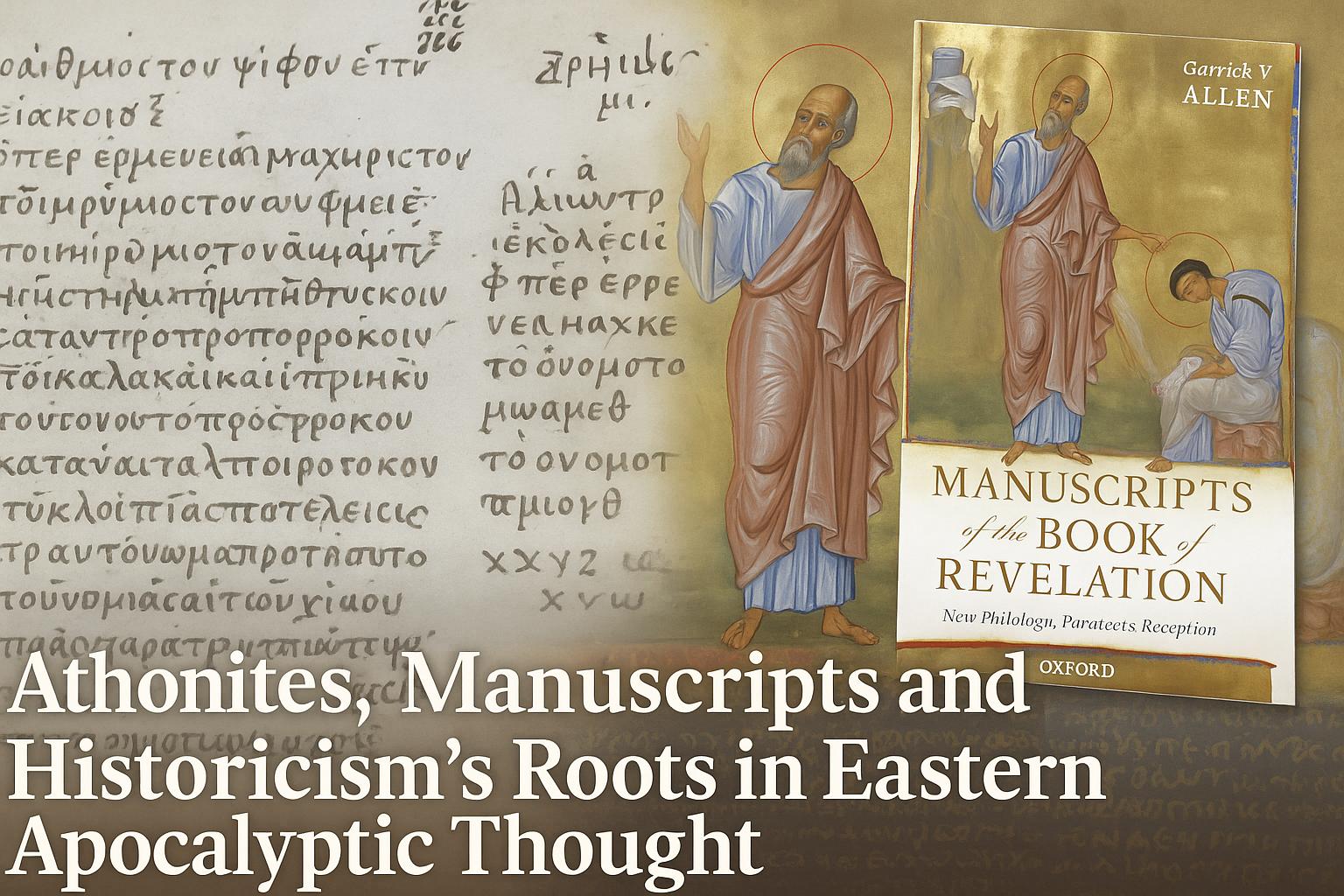
Abstract
Recent work by Garrick V. Allen on the manuscript tradition of the Apocalypse offers one of the most significant scholarly confirmations to date that Eastern Orthodox Historicist Eschatology—the reading of Revelation’s beasts, numbers, and symbols as unfolding across historical epochs, particularly through the rise of Islam and the dominance of the Latin Papacy—is not a modern innovation. Nor is it derivative of Protestant historicism, as often alleged by critics. Instead, Allen’s meticulous examination of marginalia, paratexts, and scribal computations across Greek manuscripts of Revelation demonstrates a continuous, indigenous Orthodox tradition spanning from the tenth to the nineteenth centuries. This essay synthesizes Allen’s findings with the work of post-Byzantine and modern Orthodox commentators, demonstrating that Eastern Orthodox Historicism emerges from the lived, historical and theological experience of the Byzantine and post-Byzantine world.
by: Jonathan Photius, N.E.O.-historicism Research Project
1. Introduction: The Rediscovery of an Overlooked Orthodox Hermeneutic
Eastern Orthodox engagement with the Book of Revelation has long been portrayed in modern scholarship as spiritually symbolic, liturgically oriented, and disinterested in historical chronology. Yet a significant body of evidence—largely overlooked outside specialist circles—reveals a parallel tradition: a robust historicist reading of Revelation, especially Chapters 12–13 and 17, in which Islam and the Papacy are interpreted as the eschatological adversaries prefigured in the apocalyptic visions.
The work of Garrick V. Allen has now brought to light the textual and material foundations of this tradition. His analyses of marginal comments in dozens of Greek manuscripts, especially those preserved in Athonite and other monastic contexts, demonstrate that the historicist identification of Muhammad, Islam, and the Latin West as eschatological powers was not only present, but pervasive, deeply embedded in Greek Orthodox scribal and exegetical culture from the late Byzantine to the early modern period.1
This essay situates Allen’s findings within the broader historical arc of Eastern Orthodox exegetical practice, showing how the manuscript tradition he documents intersects with, informs, and anticipates the published commentaries and eschatological works of major Orthodox historicists—Christophoros Angelos, Anastasios Gordios, Zacharias Gerganos, Georgios Koressios, Apostolos Makrakis, and Neilos Sotiropoulos.
2. Allen’s Manuscript Evidence: A Forgotten Archive of Orthodox Historicism
Allen’s two studies—“An Anti-Islamic Marginal Comment in the Apocalypse of Codex Reuchlin (GA 2814)” and Monks, Manuscripts, Muhammad, and Digital Editions of the New Testament—offer the most detailed catalog to date of marginalia relating to Revelation 13:18. These manuscripts, copied across centuries and geographical regions, reveal stable and recurring interpretive patterns that align unmistakably with the historicist tradition.
2.1. Islam and Muhammad as the Beast: A Continuous Tradition
Allen shows that at least six manuscripts (GA 1775, 1778, 2072, 2075, 2077, 2814) explicitly identify Muhammad—named as Μωαμεθ, Μαμέτιος, or Μοαμετίς—as the referent of 666 through Greek isopsephy.2
In GA 1778, for instance, the scribe notes:
“For this refers to the calculation concerning the false prophet Muhammad… for in Greek he is called Mametios, and the calculation lacks nothing.”3
Other manuscripts compute the numerical value of “Muhammad” or even of Ottoman sultans (e.g., Abdulmejid I) directly in Arabic numerals.
Allen concludes emphatically:
“Some readers of Revelation were intent on seeing coded reference to Muhammad in the New Testament.”4
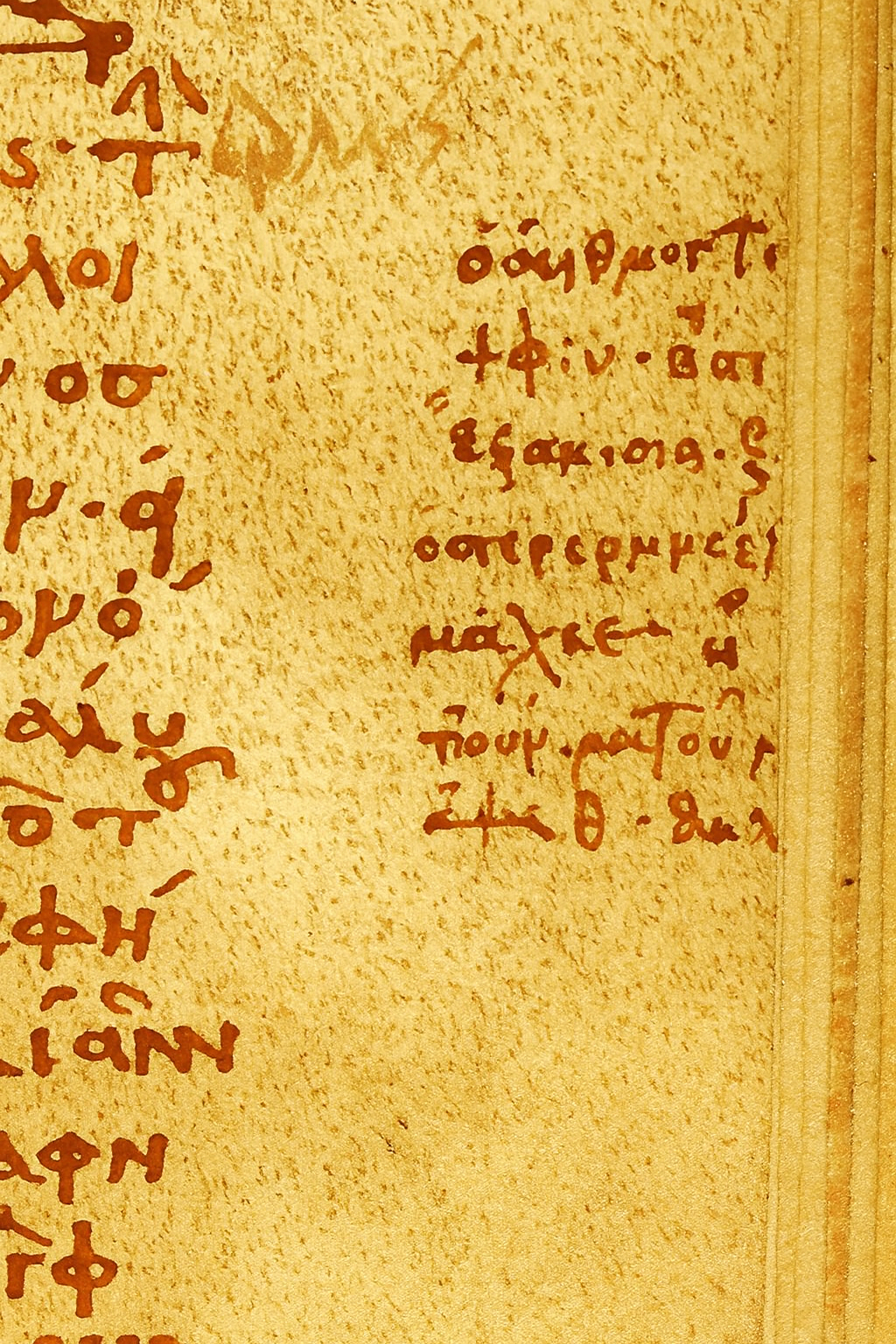
– Marginal note added to an early 15th-century Mt Athos manuscript of Irenaeus’ interpretation in Adv. Haer. 5.30.1–3 (GA 1859 2027)
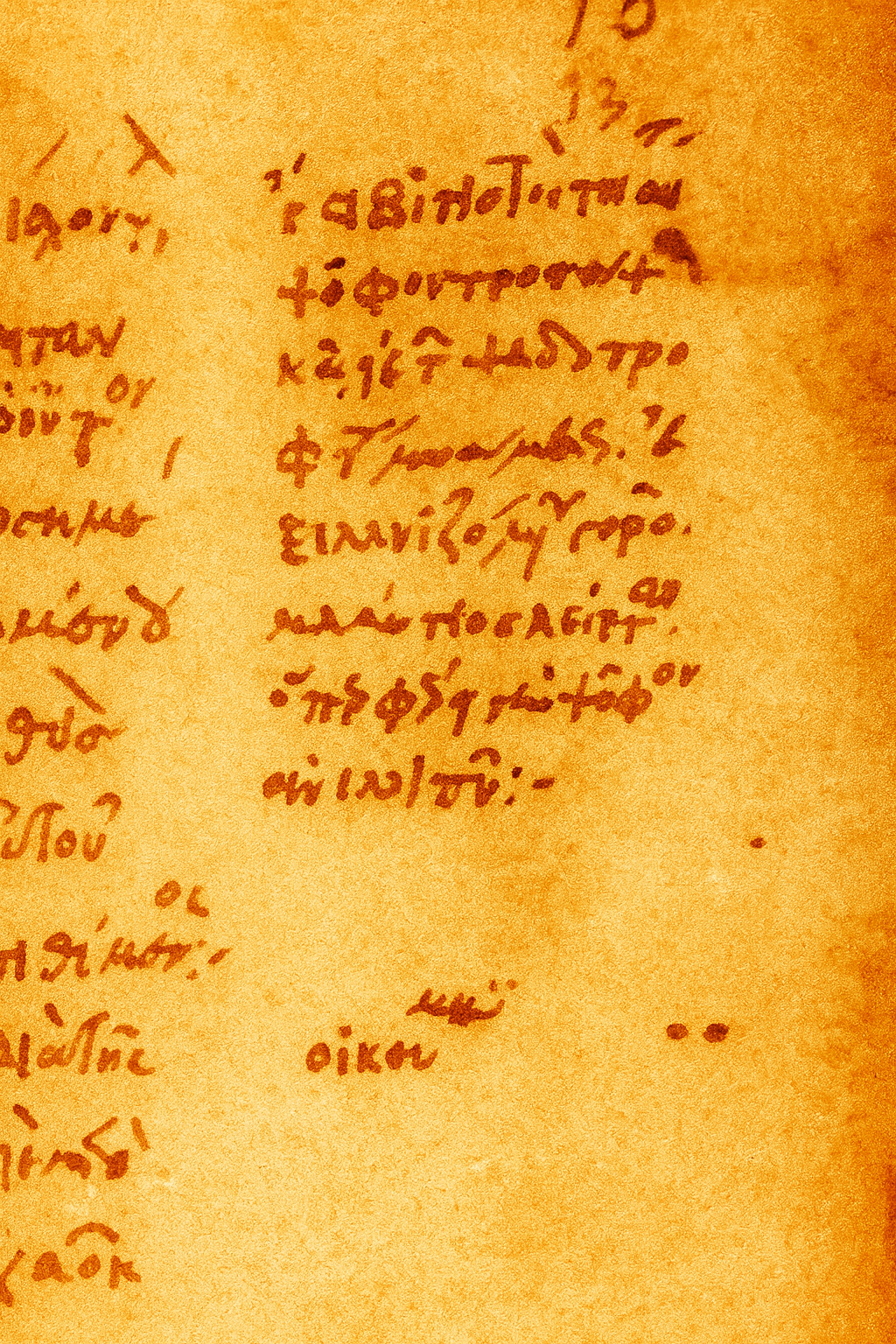
– Marginal note related to a Revelation commentary on Oecumenius and Andrew, a fourteenth century manuscript GA 1778 (Thessaloniki, Vlatadon Monastery, 35)
2.2. The Papacy and Latin Church as Eschatological Opponents
Allen documents parallel traditions identifying the Latin Church—ΛΑΤΕΙΝΟΣ (Lateinos), Βενεδικτός (Benedict), and other names—as bearers of the number 666. These readings appear in both commentary manuscripts and marginal notes, especially after the Fourth Crusade and during union debates.
Allen writes:
“Interpretations tended to identify the antichrist as either the papacy, Muhammad, or both.”5
The dual antagonistic framework—Islam and the Papacy—is thus not a modern invention but an entrenched hermeneutical axis in Greek Orthodox tradition.
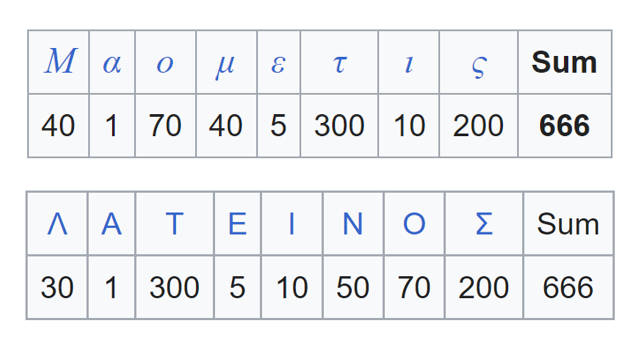
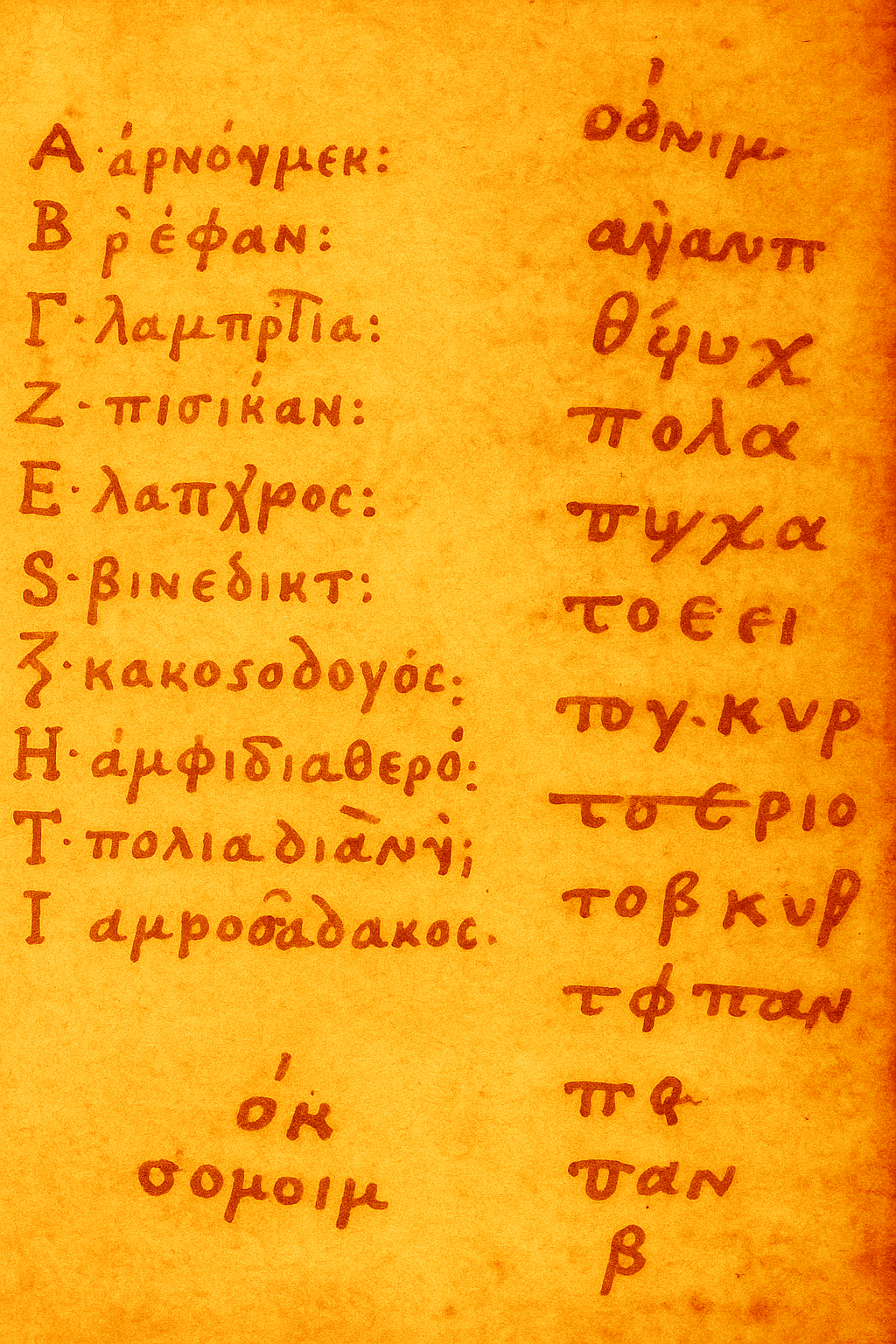
Names for 666 shown are: Arnoume, Rephan, Lampetis, Titan, Lateinos, Benedict, Wicked Guide, True Harm, Ancient Slander, Unjust Lamb.
2.3. A Chronologically Deep and Geographically Broad Tradition
Allen’s tables document manuscripts spanning tenth to nineteenth centuries, with a concentration on Mount Athos, though not limited to it: Paris, Moscow, Bucharest, Rome, Munich, and Grottaferrata all preserve witnesses.
He concludes:
“These traditions represent dominant ways of reading Revelation 13:18, especially in Greek Orthodox monasteries.”6
This is one of the strongest statements in modern scholarship affirming the mainstream status of Orthodox historicist exegesis.
3. The Historicist Mindset of Late- and Post-Byzantine Orthodox Commentators
The manuscript tradition documented by Allen is not an isolated phenomenon—it directly connects to the interpretive frameworks of the most prominent Orthodox theologians and commentators from the 13th–19th centuries.
3.1. SAint neophytos the recluse (1134–1214)
Nyophytos’s commentary written after the 1204 Latin conquest of Constantinople presents a remarkable shift over previous Byzantine commentators Andrew and Arethus by writing:
- Muhammad is the first beast of Revelation 13
- Calculates the following names for 666: Evanthas, Titan, Lateinos, and Benedict, pointing to Rome
3.2. Christophoros Angelos (1575–c. 1650)
Angelos’ commentary—discussed by Allen—reads Revelation through an explicitly historicist lens. Angelos writes that:
- Muhammad is the Antichrist
- The Pope is the First Beast
- Historical empires correspond to the successive beasts of Daniel and Revelation
- I should also point out that Angelos was the first to apply the year/day principle and the 1260-year calculation to the Rise and Fall of Islam.
Allen confirms this alignment:
“Anghelos argues forcefully… that Muhammad is the Antichrist, not the Pope, although the Pope is identified as the first beast.”7
3.3. saint Anastasios Gordios (1654–1729)
Gordios’ Book Against Muhammad and the Latins is one of the clearest expressions of Orthodox historicism:
- He identifies the two beasts as Muhammad (Islam) and the Pope (Latin West).
- He applies Daniel’s four kingdoms to real historical empires.
- He integrates chronologies (600 + 66 = 666) as a mathematical midrash on the life of Muhammad.
Allen highlights the novelty and sophistication of Gordios’ method:
“Gordios appealed not to gematria but to biography… Muhammad’s birth in 600 and lifespan of 66 years equaling 666.”8
3.4. Zacharias Gerganos (d. c. 1631)
Gerganos interprets Revelation in ways deeply resonant with later historicists:
- 666 = ΛΑΤΕΙΝΟΣ = the Latin Church
- The False Prophet = Muhammad
- The Beast = Papal Rome
His work displays both anti-Islamic and anti-Latin polemics.
3.5. Early Modern Orthodox Historicists: Koressios, Lavriotis, Polyidis
Other post-Byzantine readers interpret Revelation in the same historical continuum, especially in relation to:
- Ottoman rule
- Catholic-Protestant tensions
- Decline of Byzantium
3.6. Apostolos Makrakis (1831–1905) and the Modern Revival of Orthodox Historicism
Makrakis’ monumental commentary on Revelation builds upon precisely the manuscript and exegetical traditions with which Allen’s findings connect.
Makrakis:
- Upheld Andrew of Caesarea while expanding historical typologies
- Identified Islam as the Beast’s power
- Interpreted Islam’s duration using prophetic chronologies
- Placed the Ottoman Empire and its fall within Revelation’s arc
- His interpretation was published EXACTLY 1260 years after Mohammed’s Hegira and start of a new calander/chronology in 622 AD. Remarkable considering his opening reference to Daniel 12:7 in his commentary.
Critics often accused Makrakis of introducing Protestant historicism into Orthodoxy. Allen’s research, however, now demonstrates that Makrakis’ readings stand in direct continuity with at least 500 years of Orthodox monastic manuscript tradition and strong similarities and parallells to commentaries on Revelation by St. Anastasios Gordios, Metropolitan John of Myra, and Cyril Lavriotos.
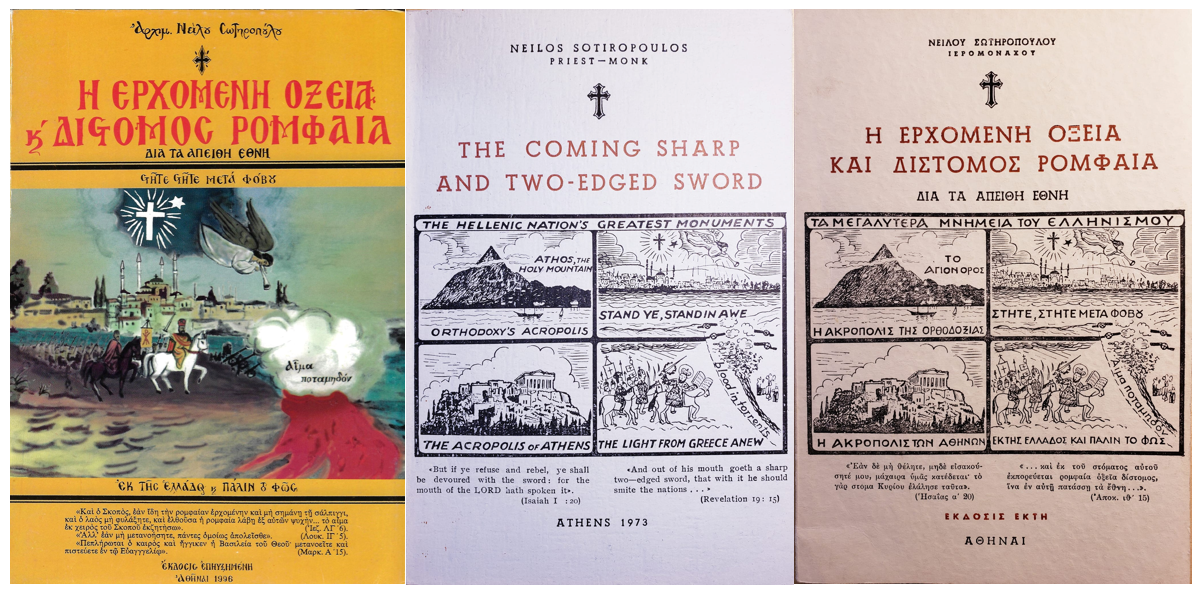
3.6. Neilos Sotiropoulos (Athonite Monk, 1967/1973/1996)
Sotiropoulos, a hieormonk from Simonpetra monastery of Mt Athos, openly defended and further developed some of the ideas in Makrakis’s Revelation commentary and continued:
- Identification of Islam as the eschatological adversary
- A historical unfolding of Revelation
- Revised Day-year prophetic calculations for the 1260 years of Daniel and Revelation to the year 1948 and Israel, measured from Babylonian Captivity in 6th century BC and fall of Jerusalem in 637 AD to Islam.
Sotiropoulos consciously presents himself as the 20th century heir to the very manuscript traditions Allen uncovers with respect to the Papal-Islamic Beasts.
4. Theological and Cultural Context: Why Orthodox Historicism Emerged
Allen’s work not only documents the tradition but contextualizes it.
4.1. Ottoman Domination and Eschatological Imagination
Following the fall of Constantinople (1453), Greek monastic communities interpreted their political reality through Revelation’s symbolic universe:
- The rise of Islam was read as apocalyptic fulfillment.
- Ottoman sultans were seen as heads of the Beast.
- Eschatology provided a framework for suffering, endurance, and hope.
Allen writes:
“These communities understood their present through the lens of scriptural interpretation… the threat of Islamic domination posed an existential threat and could be identified with one of Revelation’s beasts.”9
4.2. Anti-Latin Sentiment and Papal Opposition
After 1204 and subsequent union councils, many Orthodox readers identified the Latin Church as an eschatological adversary. This explains:
- The numerical focus on ΛΑΤΕΙΝΟΣ
- Polemical treatises like Gordios’
- Marginalia emphasizing Benedict and other papal names
4.3. Manuscripts as Sites of Eschatological Resistance
The scribes did not merely copy texts; they interpreted, warned, and guided readers through paratexts. Marginalia served as:
- Devotional admonitions
- Eschatological reflections
- Political commentary
- Theological resistance
Thus, Orthodox historicism was a lived tradition embedded in the material culture of monastic scriptoria.
5. Synthesizing Allen and the Orthodox Historicist Tradition
Allen’s research bridges the gap between textual criticism and reception history, establishing a line of continuity between early Byzantine exegetes, medieval scribes, early modern theologians, and modern Orthodox interpreters.
5.1. Continuity of Method
| Stage | Expression of Historicism |
|---|---|
| Late Antiquity | Irenaeus proposes gematria-based decoding. |
| Byzantine Commentators | Andrew of Caesarea expands symbolic-historical readings. |
| Medieval Manuscripts | Scribes identify Muhammad and Latins as eschatological figures. |
| Post-Byzantine Commentators | Gordios, Angelos, and others synthesize manuscript cues into formal commentaries. |
| Modern Orthodox Revival | Makrakis and Sotiropoulos re-systematize historicism for the modern world. |
5.2. A Distinctly Orthodox Hermeneutic
Contrary to assumptions that historicism is “Western,” Allen’s findings demonstrate a deeply Eastern, deeply Orthodox interpretive lineage.
Orthodox historicism is characterized by:
- Symbolism + history in synergy
- Liturgical cosmology integrated with political history
- Reliance on Greek isopsephy rather than Hebrew numerology
- Awareness of ecclesiastical enemies (Latin West) and imperial threats (Islam)
- Perception of Revelation as the key to understanding the decline of Byzantium
The tradition emerges organically from Orthodox experience, not from Protestant polemic.
6. Implications for Contemporary Scholarship and Neo-Historicism
Allen’s research fundamentally changes the scholarly landscape surrounding Orthodox eschatology.
6.1. Historicism is Indigenous, Not Imported
Modern Orthodox critics often accuse Makrakis and later writers of deviating from patristic exegesis. Yet Allen shows that:
- Historicism is embedded in the manuscript tradition
- Its roots are Byzantine and monastic
- It is older than Protestantism
6.2. The Eastern and Western Historicist Traditions Are Distinct
Western Protestant historicism focuses on:
- Papacy as Antichrist
- Roman imperial legacy
- Reformation controversies
Eastern Orthodox historicism emphasizes:
- Dual enemies (Islam + Papacy)
- Fall of Byzantium
- Ottoman captivity
- Preservation of Orthodox identity
6.3. Easter Historicism as the Modern Continuation
Eastern Orthodox Historicist Eschatology emerges as the systematic articulation of a long-standing hermeneutical tradition—organizing and synthesizing what the manuscripts, commentators, and modern interpreters have preserved.
7. Conclusion
Garrick V. Allen has revealed what earlier scholars only hinted at: a rich, continuous, and deeply rooted tradition of Orthodox historicist interpretation of Revelation, preserved not merely in published commentaries but in the material culture of Greek manuscripts themselves. This tradition:
- Predates Protestantism
- Spans nearly a millennium
- Interprets Revelation through historical events affecting Orthodox communities
- Identifies Islam and the Latin West as the two great eschatological powers
- Culminates in the systematic work of Metropolitan John of Myra, Lavriotis, Makrakis and Sotiropoulos
The Orthodox historicist tradition is thus not marginal, eccentric, or heterodox. It is a central current within the post-Byzantine religious imagination.
Allen’s scholarship does more than illuminate manuscripts—it restores to view an entire Orthodox apocalyptic worldview, one whose coherence and depth modern scholarship is only beginning to appreciate, and which the Neo-Historicism Research Project now seeks to synthesize for a new generation.
Footnotes
- Garrick V. Allen, Monks, Manuscripts, Muhammad, and Digital Editions of the New Testament, 183–202.
- Ibid., 197–201.
- Ibid., 198.
- Ibid., 200.
- Ibid., 197.
- Ibid., 202.
- Ibid., 202.
- Garrick V. Allen, “An Anti-Islamic Marginal Comment in the Apocalypse of Codex Reuchlin (GA 2814),” 197–198.
- Allen, Monks, Manuscripts, Muhammad, 199.
Bibliography
Primary Sources
Achelis, Hans, ed. Hippolyt’s Kleinere Exegetische und Homiletische Schriften. Leipzig: Hinrichs’sche, 1897.
Andrew of Caesarea. Commentary on the Apocalypse. Various manuscripts and critical editions; see de Groote 1999 and Constantinou 2013.
Angelos, Christophoros. Interpretation of the Apocalypse (unpublished Greek manuscripts; summarized in Argyriou 1982).
Arethas of Caesarea. Commentary on Revelation. Edited and translated in A. von Blumenthal, Arethas von Caesarea: Kommentar zur Offenbarung des Johannes. Berlin: De Gruyter, 2015.
Gordios, Anastasios. Βιβλίον κατὰ Μωάμεθ καὶ Λατίνων [Book Against Muhammad and the Latins]. Various manuscripts; see Argyriou 1969a, 1969b, 1982.
Gerganos, Zacharias. Exegesis of the Apocalypse of John. Ed. Asterios Argyriou. Thessaloniki: 1991.
Hippolytus of Rome. De Antichristo and De Consummatione mundi. In Achelis, Hippolyt’s Kleinere Schriften.
Irenaeus. Adversus Haereses. Book 5. Translated and edited in ANF/SC series.
Oecumenius. Commentary on the Apocalypse. Edited by Marc de Groote. Leuven: Peters, 1999.
Pseudo-Hippolytus. De consummatione mundi.
Theodoret of Jannina. Ἑρμηνεία εἰς τὴν Ἀποκάλυψιν. Published 1800 edition (anonymous) and Athos manuscripts; see Argyriou 1982.
Secondary Sources (Modern Scholarship)
Allen, Garrick V. “An Anti-Islamic Marginal Comment in the Apocalypse of ‘Codex Reuchlin’ (GA 2814) and its Tradition.” In From Scrolls to Scrolling, edited by B. A. Anderson, 181–211. Berlin: De Gruyter, 2020.
———. Monks, Manuscripts, Muhammad, and Digital Editions of the New Testament. In Ancient Worlds in Digital Culture, 181–211. Berlin: De Gruyter, 2020.
Aland, B., et al., eds. Novum Testamentum Graecum Editio Critica Maior IV: Die Katholischen Briefe. 2nd ed. Stuttgart: Deutsche Bibelgesellschaft, 2011.
Angold, Michael. “Byzantium and the West, 1204–1453.” In The Cambridge History of Christianity: Eastern Christianity, 53–78. Cambridge: Cambridge University Press, 2008.
Argyriou, Asterios. Anastasios Gordios et la polémique anti-islamique post-byzantine. Revue des Sciences Religieuses 43 (1969): 58–87.
———. Αναστάσιος ὁ Γόρδιος καὶ τὸ σύγγραμμά του: Περί του Μωάμεθ και εναντίον των Λατίνων. Athens, 1969 (PhD thesis).
———. Les exégèses grecques de l’Apocalypse à l’époque turque (1453–1821): Esquisse d’une histoire des courants idéologiques au sein du peuple grec asservi. Thessaloniki: Krono, 1982.
———. Ἐξήγησις εἰς τὴν τοῦ Ἰωάννου Ἀποκάλυψιν. Athens: 1991.
Aune, David E. Revelation 6–16. Word Biblical Commentary 52B. Nashville: Thomas Nelson, 1998.
Bauckham, Richard. The Climax of Prophecy: Studies on the Book of Revelation. Edinburgh: T&T Clark, 1993.
Beale, G. K. The Book of Revelation. NIGTC. Grand Rapids: Eerdmans, 1999.
Birdsall, J. Neville. “Irenaeus and the Number of the Beast.” In New Testament Textual Criticism and Exegesis: Festschrift J. Delobel, edited by A. Denaux, 349–359. Leuven: Peeters, 2002.
Blumell, Lincoln H., and Wayment, Thomas A. “The ‘Number of the Beast’: Revelation 13:18 and Early Christian Isopsephies.” In The Book of Seven Seals, edited by T. J. Kraus and M. Sommer, 119–135. Tübingen: Mohr Siebeck, 2016.
Breed, Brennan W. Nomadic Text: A Theory of Biblical Reception History. Bloomington: Indiana University Press, 2014.
Cerquiglini, Bernard. In Praise of the Variant: A Critical History of Philology. Baltimore: Johns Hopkins University Press, 1999.
Cole, Zachary J. Numerals in Early Greek New Testament Manuscripts: Text-Critical, Scribal, and Theological Studies. Leiden: Brill, 2017.
Constantinou, Eugenia Scarvelis. Guiding to a Blessed End: Andrew of Caesarea and His Apocalypse Commentary in the Ancient Church. Washington, D.C.: Catholic University of America Press, 2013.
Dochhorn, Jan. Schriftgelehrte Prophetie: Der eschatologische Teufelsfall in Apc Joh 12. Tübingen: Mohr Siebeck, 2010.
Eggert, Paul. “Apparatus, Text, Interface.” In The Cambridge Companion to Textual Scholarship, 97–118. Cambridge: Cambridge University Press, 2013.
Epp, E. J. “The Multivalence of the Term ‘Original Text’ in New Testament Textual Criticism.” Harvard Theological Review 92 (1999): 245–81.
Hernández, Juan. “Andrew of Caesarea and His Reading of Revelation.” In Die Johannesapokalypse: Kontexte – Konzepte – Rezeption, 755–774. Tübingen: Mohr Siebeck, 2012.
Hoskier, H. C. Concerning the Text of the Apocalypse. 2 vols. London: Quaritch, 1929.
Houghton, H. A. G., and Smith, Catherine. “Digital Editing and the Greek New Testament.” In Ancient Worlds in Digital Culture, 110–127. Leiden: Brill, 2016.
Kerr, Michael. “Orthodox Anti-Latin Polemics in the Post-Byzantine Era.” Byzantine and Modern Greek Studies 32 (2008): 123–146.
Koester, Craig. Revelation. Anchor Yale Bible 38A. New Haven: Yale University Press, 2014.
Kolbaba, Tia M. The Byzantine Lists: Errors of the Latins. Urbana: University of Illinois Press, 2000.
Lembke, Markus. “Beobachtungen zu den Handschriften der Apokalypse des Johannes.” In Die Johannesoffenbarung, 19–69. Leipzig: Evangelische Verlagsanstalt, 2012.
Makrakis, Apostolos. Interpretation of the Revelation of St. John the Divine. Athens, 1886–1890.
McGann, Jerome. Radiant Textuality: Literature after the World Wide Web. New York: Palgrave Macmillan, 2001.
———. A New Republic of Letters: Memory and Scholarship in the Age of Digital Reproduction. London: Harvard University Press, 2014.
Podskalsky, Gerhard. Griechische Theologie in der Zeit der Türkenherrschaft (1453–1821). Munich: Beck, 1988.
Parker, D. C. Textual Scholarship and the Making of the New Testament. Oxford: Oxford University Press, 2012.
Schmid, Josef. Studien zur Geschichte des griechischen Apokalypse-Textes. Munich: Karl Zink, 1955.
Sigismund, Matthias. “Die neue Edition der Johannesapokalypse: Stand der Arbeiten.” In Studien zum Text der Apokalypse II, 3–17. Berlin: de Gruyter, 2017.
Sotiropoulos, Neilos. Ἡ Ἀποκάλυψις κατὰ τὴν Ἑλληνικὴν Ἐρμηνευτικὴν Παράδοσιν. Athens: 1964.
Strutwolf, Holger, et al., eds. Novum Testamentum Graecum Editio Critica Maior III: Die Apostelgeschichte. Stuttgart: Deutsche Bibelgesellschaft, 2017.
van Henten, Jan Willem. “Dragon Myth and Imperial Ideology in Revelation 12–13.” In The Reality of Apocalypse, 181–203. Atlanta: SBL Press, 2006.
Williams, Peter J. “P115 and the Number of the Beast.” Tyndale Bulletin 58 (2007): 151–53.
Zachariadou, Elizabeth A. “Mount Athos and the Ottomans c.1350–1550.” In The Cambridge History of Christianity: Eastern Christianity, 154–168. Cambridge University Press, 2008.
———. “The Great Church in Captivity 1453–1586.” In The Cambridge History of Christianity: Eastern Christianity, 169–186. Cambridge University Press, 2008.

