
Revelation 19, the Seven Thunders, and the Promise of a Future Ecumenical Council
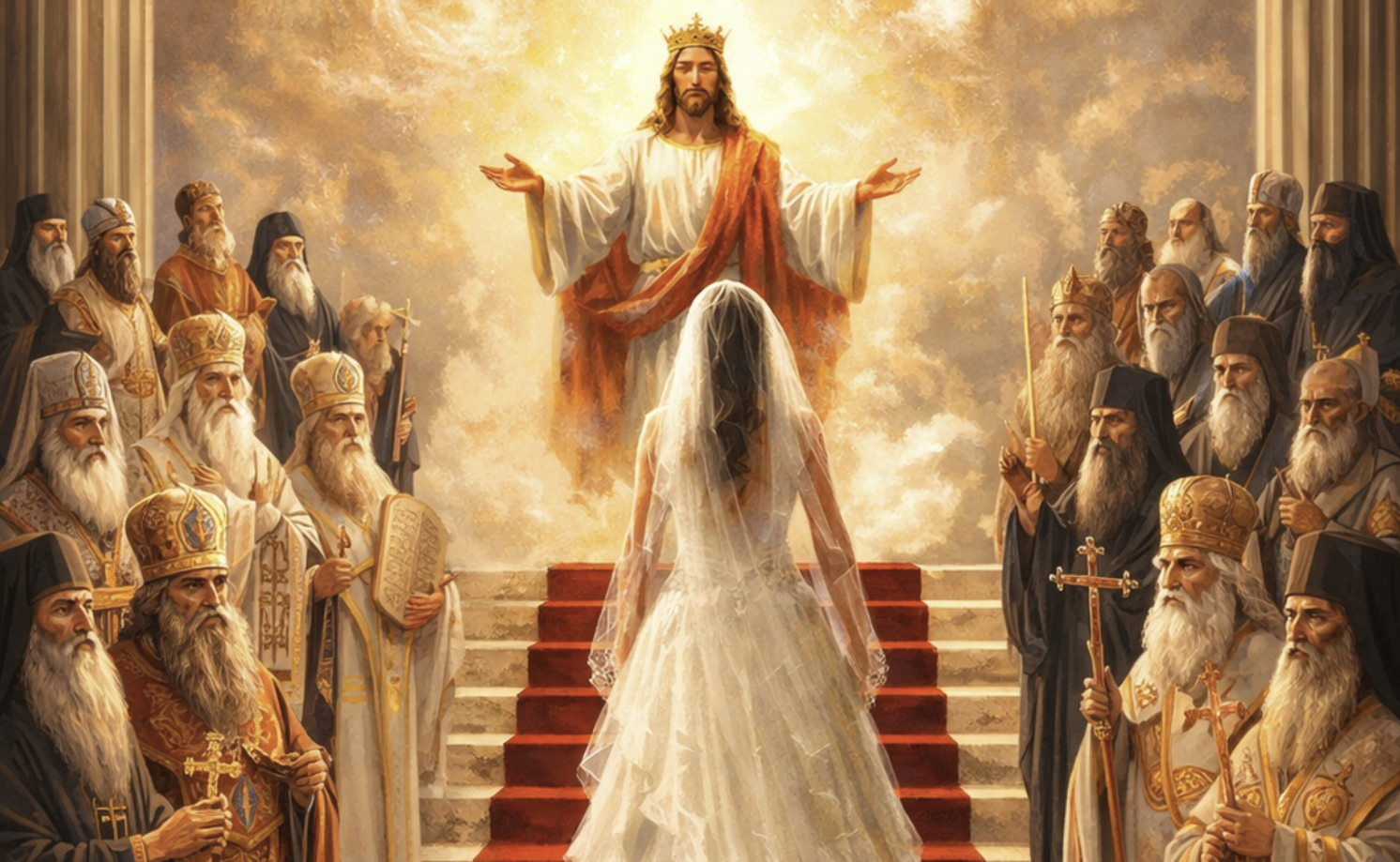
Revelation 19 is not merely a distant heavenly tableau projected beyond history, but a prophetic vision of the Church’s restoration within history. The imagery of the “great multitude,” the “roar of rushing waters,” and the “mighty peals of thunder” is not ornamental or rhetorical excess. These sounds signify a decisive moment when the Church—long persecuted, marginalized, and silenced—regains her public and authoritative voice. This vision follows organically after the wilderness period of Revelation 12, during which the Woman was driven into refuge for a measured time. Revelation 19 portrays her return: no longer hidden, no longer eclipsed, but vindicated, proclaimed, and revealed as the true Bride of the Lamb.
The Woman / Bride of Revelation 19 is explicitly the same Woman introduced earlier in Revelation 12: clothed with the Sun, crowned with twelve stars, persecuted by the Dragon, and preserved through prolonged trial. When Scripture declares that she “has made herself ready,” this readiness must not be reduced to individual piety alone. Rather, it denotes restored doctrine, purified worship, healed ecclesial order, and visible unity. The Bride’s “fine linen” is interpreted by the Apocalypse itself as “the righteousness of the saints”—not an abstract moral quality, but the corporate righteousness of the Church clothed once again in truth, holiness, and right confession after a long period of distortion and concealment.
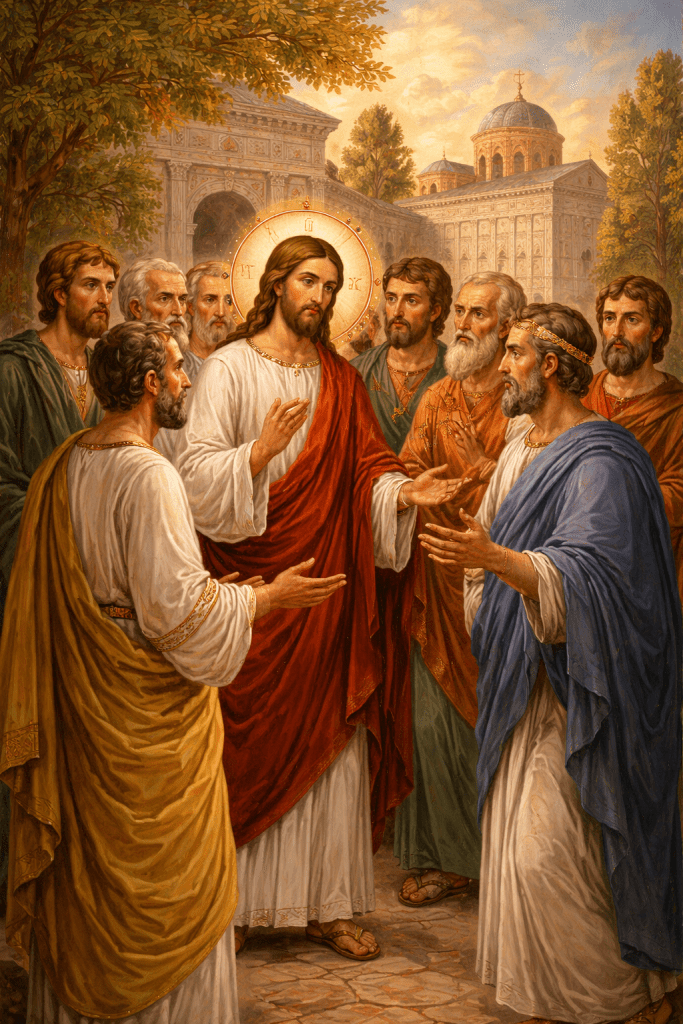
The sounds John hears are the key to interpreting this moment. Across the Johannine writings, thunder functions as a sign of the voice of God made public in history. In John 12:28–29, when Christ prays, “Father, glorify Thy name,” the heavenly voice responds, “I have glorified it, and I will glorify it again,” and the crowd declares, “It thundered.” This moment occurs precisely when the Greeks come seeking Jesus (John 12:21–23), prompting Christ’s declaration: “Now is the time for the Son of Man to be glorified.” The thunder marks a transition—from a hidden, localized ministry to a universal, ecclesial glorification. Divine glory is no longer concealed; it begins to resound outward.
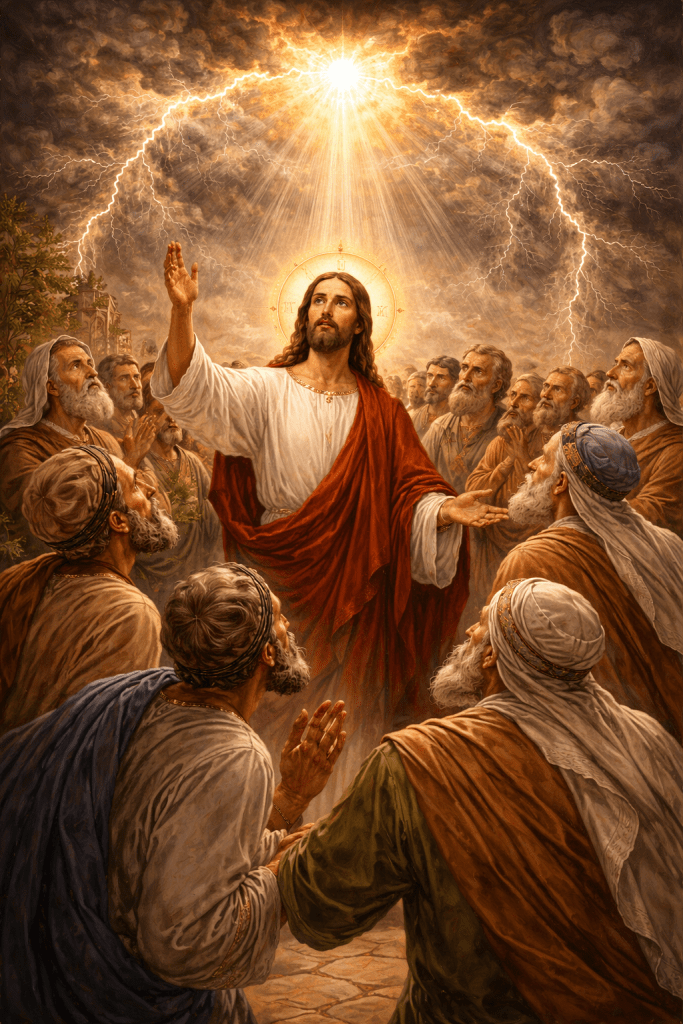
This same principle governs the Seven Thunders of Revelation 10. The Thunders speak intelligibly, yet John is commanded to seal their words. Their meaning is not abolished but deferred, destined to unfold through time rather than instant disclosure. Within the Byzantine and Orthodox historicist imagination, these Seven Thunders correspond naturally to the Seven Ecumenical Councils—those decisive moments when heaven spoke authoritatively through the Church, clarifying doctrine, judging heresy, and establishing the boundaries of the true faith. Councils are not private revelations; they are thunderous proclamations whose effects reverberate across centuries, peoples, and empires.
When we arrive at Revelation 19, John again hears thunder—now intensified and described as “mighty peals of thunder.” This is neither random noise nor mere repetition of earlier sounds. It is the sound of renewed conciliar proclamation after the wilderness period of the Woman. If the Seven Thunders marked the great dogmatic definitions of the Church’s past, this new thunder points forward. It signals a future moment when the Church, having endured judgment upon false powers, speaks again with clarity and authority. The Bride does not whisper in secrecy; she thunders in truth.
Scripture itself supports this pattern of visible, public manifestation. “For as the lightning comes from the east and shines as far as the west, so will be the coming of the Son of Man” (Matt. 24:27). Likewise, John testifies: “I heard what seemed to be the voice of a great multitude, like the roar of many waters and like loud peals of thunder” (Rev. 19:6). These are not silent or purely inward realities. They describe truth that flashes, resounds, and is unmistakably heard.
Within the Byzantine apocalyptic tradition, this future thunder finds further articulation. The Anonymous Prophecy of 1053 AD speaks of the submission of the Latins to the faultless Orthodox faith, the outward movement of Orthodoxy from East to West, the cessation of Papism, and the establishment of a single patriarchal unity across Europe, followed by the end of afflictions and the return of the faithful into the arms of the rejoicing Mother, the Church. Similarly, the prophecy attributed to Agathangelos (1279 AD) foresees the triumph of truth, the exaltation of the Orthodox Faith from East to West, and the glorification of God through manifest acts of His omnipotence in history.
Most explicitly, St. Neilos the Myrrh-Gusher speaks of a future eighth and last Ecumenical Synod, which will pacify heresies, separate wheat from chaff, and distinguish right doctrine from false doctrine, inaugurating a short period of peace before a final turning away. For this reason, when Orthodox writers speak of an Eighth Ecumenical Council, they do not refer merely to a retrospective historical classification, but to a future restorative council anticipated within Orthodox prophetic consciousness. Read in this light, Revelation 19 portrays precisely such a restoration: the Bride revealed in purity, the nations—symbolized by the rushing waters—called back into unity with Holy Orthodoxy, and the voice of God once more resounding through His Church.
Thus, when the Greeks came seeking Jesus in John 12, Christ announced that the time had come for the glorification of His name, accompanied by thunder from heaven. In continuity with this pattern, the time “has come and is coming” for the God-Man—confessed in two natures and two wills—to be glorified once again through His entire Church, just as He was glorified through the Church’s previous seven thunderings. The “mighty peals of thunder” of Revelation 19 point not to chaos, but to consummation within history: truth proclaimed after silence, unity after division, and glory after long suffering.
“Blessed are those who are called to the marriage supper of the Lamb.” This blessing remains present and active. The call has gone out; the garment must still be prepared. Revelation reminds us that God’s words are proven true not in abstraction, but through their fulfillment in time—until the Bride stands radiant, and Christ is glorified through His Church once more.
 NEO-Historicism - End Times Eschatology From An Eastern Orthodox Christian Historicist Perspective